
Ankle Arthroscopy: Minimally Invasive Relief for Joint Pain & Injuries
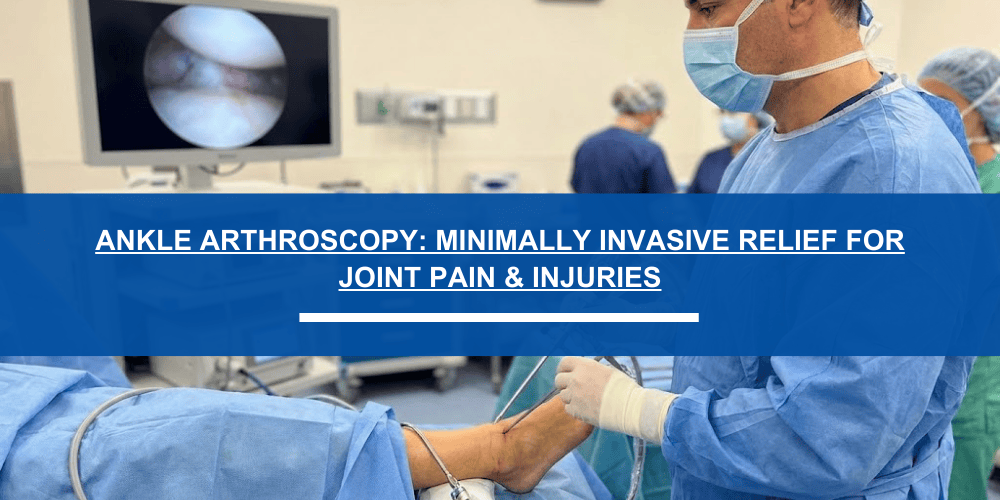
Ankle arthroscopy is a minimally invasive surgical technique used to diagnose and treat conditions inside the ankle joint. With only small incisions, surgeons can insert a camera and specialized instruments to address a variety of problems with less pain, faster healing, and minimal scarring.
Conditions Treated With Ankle Arthroscopy
Ankle arthroscopy is highly effective for treating various internal joint issues, including:
- Cartilage damage or defects (OCD lesions)
- Bone spurs (anterior ankle impingement)
- Loose cartilage or bone fragments
- Scar tissue accumulation after sprains
- Synovitis (inflammation of the joint lining)
- Persistent ankle pain after injury
Because surgeons can visualize the inside of the joint with high-definition clarity, targeted treatment becomes easier and more precise.
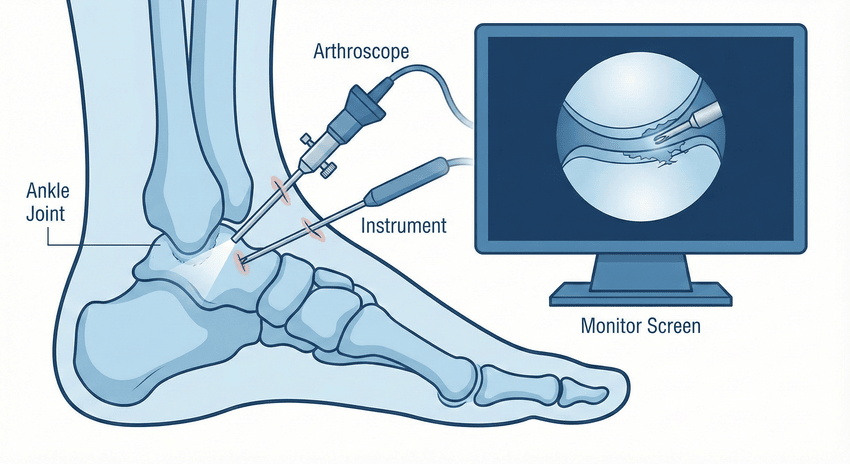
How the Procedure Works
The procedure is designed to minimize trauma to the body:
- Small incisions (portals) are made around the ankle.
- A tiny camera (arthroscope) is inserted into the joint to display images on a screen.
- Specialized miniature instruments are used to remove, repair, or smooth damaged tissue.
- The joint is flushed and cleaned to improve mobility and reduce inflammation.
This approach significantly reduces trauma to surrounding soft tissues compared to traditional open surgery.
Advantages of Ankle Arthroscopy
Compared to open surgery, patients typically benefit from:
- Smaller incisions and aesthetically pleasing scars
- Less postoperative pain and swelling
- Reduced joint stiffness
- Faster recovery timelines
- Improved joint function
- Ability to return to activity sooner
Because the procedure is minimally invasive, many patients are able to resume light activity within days.
Recovery and Expectations
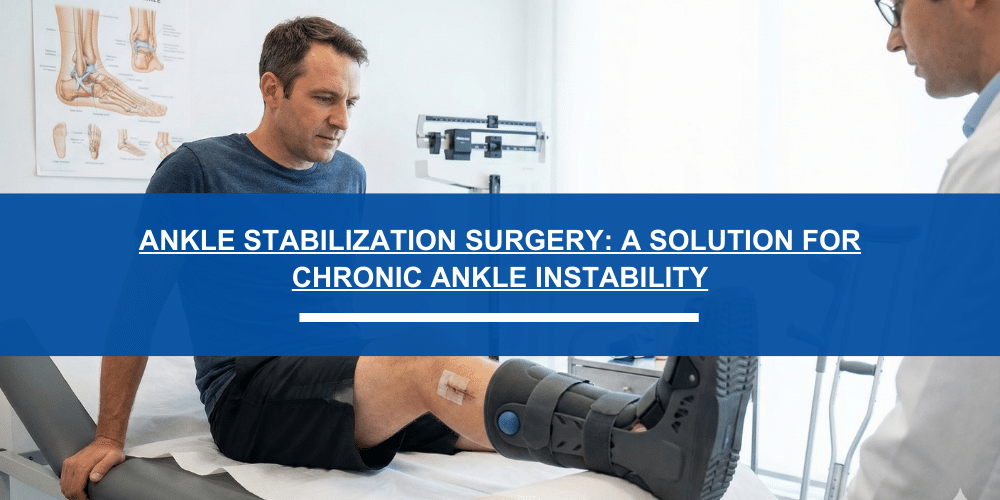
Recovery is generally quicker than open surgery, though it depends on the specific condition treated. You can expect:
- A supportive boot or brace for protection
- Early ankle mobility exercises to prevent stiffness
- Physical therapy to restore strength and balance
- Gradual return to sports over several weeks
Most individuals experience meaningful pain relief and improved mobility, especially when previous injuries were causing chronic discomfort.
How City Orthopaedics & Spine Medicine Can Help
At City Orthopaedics & Spine Medicine, we prioritize getting you back to your active lifestyle with as little downtime as possible. Our surgeons are highly skilled in advanced ankle arthroscopy, using state-of-the-art technology to precisely treat cartilage damage, bone spurs, and chronic pain without the need for large incisions.
Whether you are an athlete dealing with an old injury or experiencing unexplained ankle pain, our team offers a thorough evaluation and a personalized, minimally invasive treatment plan. Contact us today to see if ankle arthroscopy is the right solution for you.
Frequently Asked Questions (FAQs)
1. How long does it take to recover from ankle arthroscopy?
Recovery is faster than open surgery. Most patients can walk in a boot within a few days and return to normal shoes in 1–2 weeks. Full return to sports usually takes 4–6 weeks, depending on the procedure performed.
2. Is ankle arthroscopy painful?
Because the incisions are very small and there is less tissue damage, pain is typically mild to moderate and much more manageable than traditional surgery. Most patients only require pain medication for a few days.
3. Will I have large scars after the surgery?
No. Ankle arthroscopy uses “portal” incisions that are typically less than 1 cm in length. These heal very well and often become barely visible over time.
4. Can ankle arthroscopy fix arthritis?
It can help clean out bone spurs and loose tissue associated with early arthritis, which relieves pain. However, for advanced arthritis where cartilage is completely worn away, other procedures like fusion or replacement might be better options.
5. Do I need to be asleep for the procedure?
The surgery is usually performed under general anesthesia or regional nerve blocks, so you will not feel any pain during the procedure. It is almost always an outpatient surgery, meaning you go home the same day.